electrical properties of adhesives

Electrically Insulative & Conductive Epoxy Adhesives

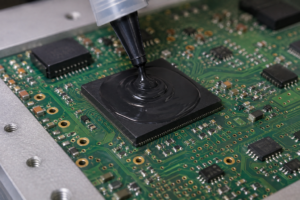
Kohesi Bond manufactures both electrically insulative and electrically conductive epoxy adhesives, engineered to deliver precise electrical adhesive performance. Depending on your design, that means isolating sensitive components from an electrical path or creating a reliable, low-resistivity conductive bond.

Electrically Insulative Conductive Epoxy Adhesives Cover Image

Featured Medical-Grade Bonding Products

Discover our comprehensive range of custom-formulated epoxy adhesives designed for superior biocompatibility and performance in demanding medical device applications. For advanced healthcare bonding solutions, explore our product line below.

KB 1031 ATHT LO T

KB 1031 ATHT LO

Kohesi Bond KB 1031 ATHT-LO is a two component, highly toughened epoxy system suitable for bonding, sealing and coating applications. It

TUF 1613 HT DA 1

TUF 1613 HT DA

Kohesi Bond TUF 1613 HT-DA is a fast curing, true single component epoxy system for die attach applications. Unlike other die attach

KB 1631 AOLV 1 T

KB 1631 AOLV-1

Kohesi Bond KB 1631 AOLV-1 is a two component epoxy system suitable for bonding, sealing, coating, potting and encapsulation applications. It offers

TUF 1820 HTS

TUF 1820 HTS

Kohesi Bond TUF 1820 HTS is a toughened, single component, silver conductive epoxy system that requires no mixing and offers an unlimited working

KB 1689 T

KB 1689

Kohesi Bond KB 1689 is a two component, toughened, silver coated nickel filled epoxy system suitable for bonding and sealing. It has a convenient 1:1

KB 1085 1 T

KB 1085-1

Kohesi Bond KB 1085-1 is a two component, graphite filled epoxy system suitable for bonding, sealing and coating. It has a favorable 100:15 (Part A: Part B)

Key Technical Highlights

Our electrical-property portfolio covers the full spectrum from maximum insulation to maximum conductivity, with every formulation tested to relevant electrical standards and available with full technical data sheet reporting. Whether you need a dielectric adhesive for isolation or a conductive epoxy for a current path, both come from the same qualified product family.

Because autoclave moisture and gamma radiation degrade epoxies through completely different mechanisms, our technical team validates every medical epoxy against your exact sterilisation method and cycle count before specification.

Why OEMs Trust Our Electrical Epoxy Formulations

Full-Spectrum Coverage from a Single Supplier

Source both extreme insulative 10¹⁴ and highly conductive 10⁻⁴ formulations within a single verified product family. Streamline your vendor qualification process by consolidating your electrical adhesive needs under one engineering team.

Empirical Testing to Strict ASTM Standards

We report exact dielectric strength and volume resistivity data measured strictly to ASTM D149, ASTM D257, and relevant MIL-STD standards. You receive certified, batch-specific test values rather than generic or estimated baseline figures.

Custom Formulation to Exact Resistivity Targets

When off-the-shelf grades miss your target dielectric constant, dissipation factor, or frequency response, our R&D team formulates a custom system. We tune filler loading, rheology, and resin chemistry around your specific electrical and dispensing parameters.

Validated Thermal and Electrical Stability

Electrical properties are tested and validated across your full operating temperature range—from cryogenic environments up to 300°C. This ensures your bond maintains its insulation resistance or conductivity through severe thermal cycling without dielectric breakdown.

Get a formulation matched to your resistivity, dielectric strength or thermal conductivity target. 

Stability across temperature, not just at 23°C

Select Kohesi Bond grades hold stable electrical properties from cryogenic temperatures near 4 K to elevated temperatures above 300°C, but that stability is grade-specific, not catalogue-wide. Confirm the performance curve for your exact operating range before you specify.

Our electrical adhesive systems are trusted across power electronics, PCB assembly, semiconductor packaging, aerospace and medical device manufacturing. They’re the first choice when electrical isolation or conductive epoxy performance is a primary design requirement.

Stability across temperature not just at 23°C

Your Partner in Technical Success.

Access comprehensive technical documentation and expert support to ensure optimal performance in your medical device bonding applications.

Technical Data Sheets

Access comprehensive specifications, performance data, and safety information for all of our medical-grade adhesive products.

Application Guides

Learn best practices and get step-by-step instructions for product preparation, application techniques, and troubleshooting.

Engineering Support

Get direct access to our in-house technical team. Our experts are ready to provide custom formulations and specialised application support for your unique project, including custom biocompatible systems.

Certifications

Find all the necessary quality certifications and compliance documents for our products to meet your regulatory requirements.

Have An Application To Discuss?

Filling out the form below will send your inquiry directly to Kohesi Bond’s technical support department.

Find the Right Adhesive for Your Application.

    SDSTDSApplicationCatalogue


    Frequently Asked Questions

    An electrically insulating epoxy blocks current flow to a volume resistivity above 10¹⁴, letting it sit next to a live circuit without becoming part of it. An electrically conductive epoxy resin carries current instead, using silver, nickel, or carbon fillers loaded at high concentrations. Base epoxy resin is inherently an insulator—conductivity is added, so filler type and loading dictate where a formulation lands on the spectrum.

    Yes, power electronics and LED assemblies frequently require moving heat away from a component without creating a new current path. These formulations use ceramic fillers like alumina or boron nitride instead of the metal fillers used in an electrically conductive epoxy resin. The trade-off is processability—high filler loading can make the adhesive harder to dispense at fine gaps.

    We report the dielectric strength of epoxy adhesives to ASTM D149 at 23°C on a defined sample thickness and volume resistivity to ASTM D257. Dielectric strength scales inversely with thickness, so a number without a stated thickness isn’t comparable across data sheets. Where your application calls for it, we also test to relevant IEC and MIL-STD electrical methods.

    Less stable than a data sheet implies if the only figure quoted is the 23°C number, as heat increases ionic and electronic mobility in the resin matrix. Select grades maintain stable electrical properties from cryogenic temperatures near 4 K to continuous operating temperatures above 300°C, which are verified by grade-specific test data. Confirm the performance curve for your exact operating range and exposure duration with our technical team before specifying.

    Yes, where a standard grade misses your target resistivity, dielectric strength of epoxy, or frequency response, our R&D team adjusts filler loading and resin system to hit it. Share your target value, validation test method, and processing constraints like viscosity or cure profile. We formulate for that exact target rather than asking you to compromise toward a standard grade.

    It depends on the shielding effectiveness you need against the cost you can absorb. Silver-filled epoxy gives the lowest resistivity and best broad-frequency shielding but at a higher cost and a risk of electrochemical migration in humid environments under DC bias, which is conductor spacing- and encapsulation-dependent. Carbon-filled systems cost less and provide a non-magnetic bond—ideal for general static dissipation and lower-frequency EMI shielding.